
Blog
Hope-Wish develops cooled/uncooled IR lenses, thermal modules and night vision devices, with OEM & ODM available.
Nov.13,2026
What is the difference between LWIR and MWIR lenses? LWIR lenses transmit long-wave infrared energy, typically in the 8–14 µm range, while MWIR lenses are designed for mid-wave infrared energy, commonly around 3–5 µm. The right lens helps a thermal camera detect heat reliably, so businesses can improve inspection, monitoring, and safety decisions.
For buyers comparing a thermal imaging lens, the distinction is not simply “longer” versus “shorter” wavelengths. Each band works with different detector technologies, operating conditions, and inspection goals. Understanding those trade-offs can help prevent costly mismatches between a lens, camera, and real-world task.
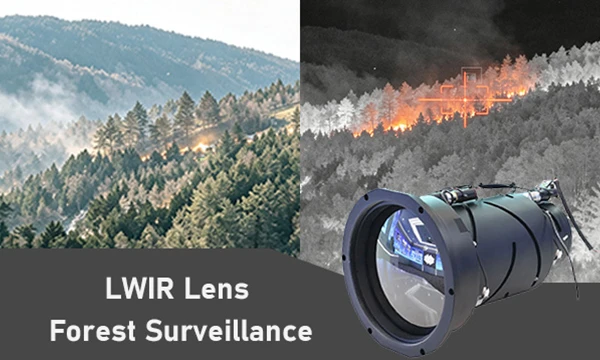
Infrared imaging grew from specialized military and scientific instruments into a tool used across manufacturing, energy, transportation, building diagnostics, and security. As detector materials and manufacturing methods improved, thermal cameras became more accessible and could be designed for specific wavelength bands.
That history matters because an infrared lens is not interchangeable with a visible-light lens. Common optical materials such as germanium, zinc selenide, and certain chalcogenide glasses are selected for their infrared transmission, durability, and compatibility with the target band. The final material and coating depend on the optical design and operating environment.
| Factor | LWIR lens | MWIR lens |
|---|---|---|
| Typical spectral band | About 8–14 µm | About 3–5 µm |
| Common detector pairing | Often uncooled microbolometers; cooled detectors are also used | Often cooled InSb or MCT detectors; configurations vary |
| Typical strengths | Passive thermal imaging and many ambient-temperature inspections | High sensitivity and fast imaging in demanding applications |
| Common considerations | Atmospheric effects, emissivity, and scene temperature | Cooling, system cost, reflected radiation, and operating conditions |
An LWIR lens must transmit the wavelengths the camera’s detector is designed to measure. The same is true for MWIR. A lens with excellent transmission in the wrong band will not deliver a useful image on an incompatible camera. Confirm the detector’s spectral response, lens transmission range, and any filter specification before purchasing.
Many LWIR cameras use uncooled microbolometers, which can support compact systems with lower operating complexity. MWIR systems often use cooled detectors to achieve high sensitivity or fast response, though the best configuration depends on the application. Cooling is not an absolute rule separating the bands; it is a system-design choice affected by detector performance, budget, and mission requirements.
Both bands are affected by the atmosphere and the target. Humidity, distance, smoke, protective windows, and reflected energy can change measurement quality. A lens selection should therefore account for the full optical path—not only the camera’s nominal wavelength.
These are common patterns, not universal rules. A specific use case may favor another band after considering target temperature, distance, background conditions, and required measurement uncertainty.
To answer “What is the difference between LWIR and MWIR lenses?” for a particular project, work through the system requirements in order:
For example, a camera with 12 µm pixels and a 25 mm focal length has an approximate instantaneous field of view (IFOV) of 0.48 mrad per pixel, using pixel pitch divided by focal length. At 10 m, that corresponds to roughly 4.8 mm per pixel in object space under ideal geometric assumptions. Actual feature recognition also depends on MTF, contrast, focus, motion, and detector performance.
Quality language is most useful when it is tied to measurable acceptance criteria. Ask a supplier for the applicable spectral-transmission data, focal-length tolerance, MTF or resolution information, coating details, environmental limits, and inspection records. Specify tolerances in the purchase agreement rather than assuming every lens is tested to the same limits.
ASTM E1933 addresses measuring and compensating for emissivity when using infrared imaging radiometers. ISO 18434-1 provides guidance for infrared thermography in condition monitoring. These standards concern thermographic measurement practice; they do not define whether a lens is LWIR or MWIR, nor do they certify a lens by themselves. Confirm the current edition and the standard’s relevance to the intended application.
When evaluating an LWIR Lenses Manufacturer, including Hope-Wish, buyers should compare technical documentation, customization capability, inspection methods, and application support. Do not infer a manufacturer’s performance or certifications from a product category alone; request evidence for the specific lens and project requirements.
Consider a maintenance team inspecting electrical panels and rotating equipment from a safe distance. If the camera is an uncooled LWIR model, an LWIR-compatible lens with a suitable field of view may provide a practical inspection setup. The team should confirm that the smallest connection or component occupies enough pixels, establish emissivity and measurement procedures, and verify focus at the working distance.
By contrast, a research facility capturing rapid thermal changes may prioritize detector sensitivity and frame rate, making an MWIR system worth evaluating. It should compare cooling requirements, operating cost, optical transmission, and the specific target’s spectral behavior before committing. In both cases, the best choice comes from matching the entire system to the job—not choosing a wavelength band by reputation.
What is the difference between LWIR and MWIR lenses? LWIR optics typically serve the 8–14 µm region, while MWIR optics typically serve the 3–5 µm region; each must match its detector and application. Compare the lens’s transmission band, focal length, aperture, MTF, environmental limits, and documented inspection criteria before purchase.
For a project involving Hope-Wish or another LWIR Lenses Manufacturer, prepare the camera model, target size, working distance, operating environment, and acceptance requirements before requesting a recommendation. A clear specification makes it easier to assess a suitable LWIR lens, MWIR lens, or complete thermal imaging configuration.
What is the difference between LWIR and MWIR lenses? The practical answer is the wavelength band and how it affects the complete imaging system. Define the job, confirm camera compatibility, and request verifiable specifications before selecting a lens.
Contact Us
More News

Request Free Quote


